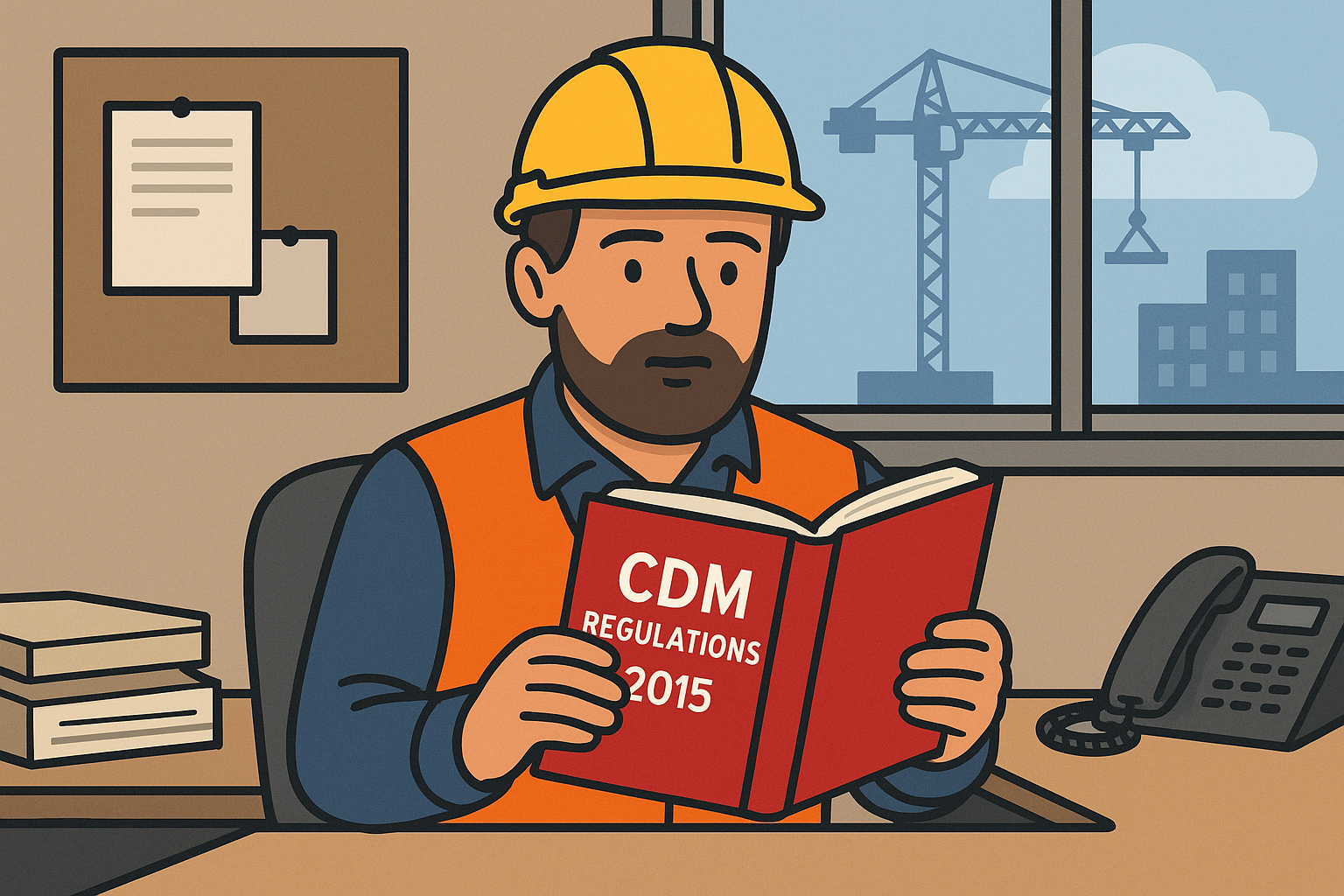
What Are the CDM Regulations?
CDM 2015 was introduced to improve health and safety standards across the construction sector. The regulations focus on improving planning, coordination and communication throughout a project.
CDM applies to all types of construction work, including new builds, refurbishments, extensions, demolition, repairs, maintenance and any work that alters an existing structure.
Why CDM Matters
Construction remains one of the highest risk industries in the UK. Many incidents occur due to poor planning, unclear responsibilities or ineffective coordination between project teams.
CDM addresses these issues through three core principles:
- Managing risk from the earliest design stages.
- Ensuring clear communication between all duty holders.
- Making sure everyone works together to maintain safe systems of work.
Effective CDM compliance improves safety, reduces delays and protects organisations from legal consequences.
Duty Holders Under CDM 2015
CDM identifies specific roles with defined legal responsibilities throughout the project lifecycle.
Clients
Commercial clients must make suitable arrangements for planning, managing and monitoring the project. Their duties include:
- Appointing a competent Principal Designer and Principal Contractor where more than one contractor is involved.
- Providing relevant pre-construction information.
- Allowing sufficient time and resources.
- Ensuring work does not begin until appropriate arrangements are in place.
Designers
Designers include architects, engineers and anyone influencing design decisions. They must:
- Eliminate foreseeable risks where possible.
- Reduce and control risks that cannot be eliminated.
- Provide relevant risk information to other duty holders.
Principal Designers
A Principal Designer must be appointed for projects involving more than one contractor. They are responsible for:
- Planning and managing the pre-construction phase.
- Coordinating designers to address health and safety risks.
- Identifying and managing foreseeable risks.
- Sharing relevant information with the Principal Contractor and client.
Principal Contractors
The Principal Contractor manages health and safety during the construction phase. Responsibilities include:
- Planning and monitoring construction work.
- Preparing the Construction Phase Plan.
- Providing inductions, welfare and safe systems of work.
- Coordinating contractors.
- Ensuring workforce competence.
Contractors
Contractors must plan and manage the work they control. They must:
- Ensure workers have appropriate skills, training and experience.
- Cooperate with the Principal Contractor and other contractors.
- Follow the Construction Phase Plan and site rules.
Workers
Workers must:
- Take reasonable care of their own health and safety.
- Follow site instructions and training.
- Report hazards and unsafe practices.
- Cooperate with employers and other duty holders.
Notifiable Projects (F10)
Some projects must be notified to the Health and Safety Executive (HSE). A project becomes notifiable if construction work is expected to:
- Last longer than 30 working days with more than 20 workers on site at the same time, or
- Exceed 500 person-days of construction work.
For commercial projects, the client is legally responsible for ensuring an F10 notification is submitted before work begins. Another duty holder may submit it on the client’s behalf.
Key CDM Documentation
Pre-Construction Information
Information provided by the client to help designers and contractors plan work safely and understand project risks.
Construction Phase Plan
A document outlining how health and safety will be managed during the construction phase. It is prepared by the Principal Contractor or sole contractor.
Health and Safety File
A record of essential information required for future maintenance, alteration or demolition. The Principal Designer coordinates this and provides it to the client at project completion.
How CDM Improves Safety
CDM 2015 improves project safety by:
- Reducing risk through better design and planning.
- Improving coordination between duty holders.
- Establishing clear responsibility.
- Managing high-risk activities such as working at height, lifting operations and temporary works.
- Promoting safer and more efficient project delivery.
NVQs That Support CDM Duty Holder Roles
Professionals acting as Principal Designers, Principal Contractors, Site Managers or Supervisors often require qualifications that demonstrate competence in construction management and CDM responsibilities.
For Principal Designers:
For Principal Contractors or Site Managers:
For Supervisors supporting CDM duties: