What Is an NVQ?
An NVQ (National Vocational Qualification) is a work-based qualification that assesses competence in a real job role.
Unlike academic qualifications, NVQs are not based on exams or classroom learning. They are assessed through:
- Workplace evidence
- Professional discussion
- Observation where required
- Demonstration of real competence in your role
This means you must already be carrying out the responsibilities of the job in order to complete the qualification.
How NVQ Levels Compare to Academic Levels
NVQs are set at nationally recognised qualification levels in England. These levels align with academic qualifications, meaning they reflect a similar level of responsibility and complexity.
You can view the official government explanation of qualification levels here:
View official UK qualification level guidance on GOV.UK
Below is a simplified comparison:
| NVQ Level |
Comparable Academic Level |
Typical Academic Qualification |
| Level 2 |
Level 2 |
GCSE (Grades 4–9) |
| Level 3 |
Level 3 |
A Levels |
| Level 4 |
Level 4 |
Higher National Certificate (HNC) |
| Level 5 |
Level 5 |
Higher National Diploma (HND) or Foundation Degree |
| Level 6 |
Level 6 |
Bachelor’s Degree |
| Level 7 |
Level 7 |
Master’s Degree |
It is important to understand that being at the same level does not mean the qualifications are identical.
The level reflects the depth of knowledge, responsibility and decision-making required, not the way the qualification is delivered or assessed.
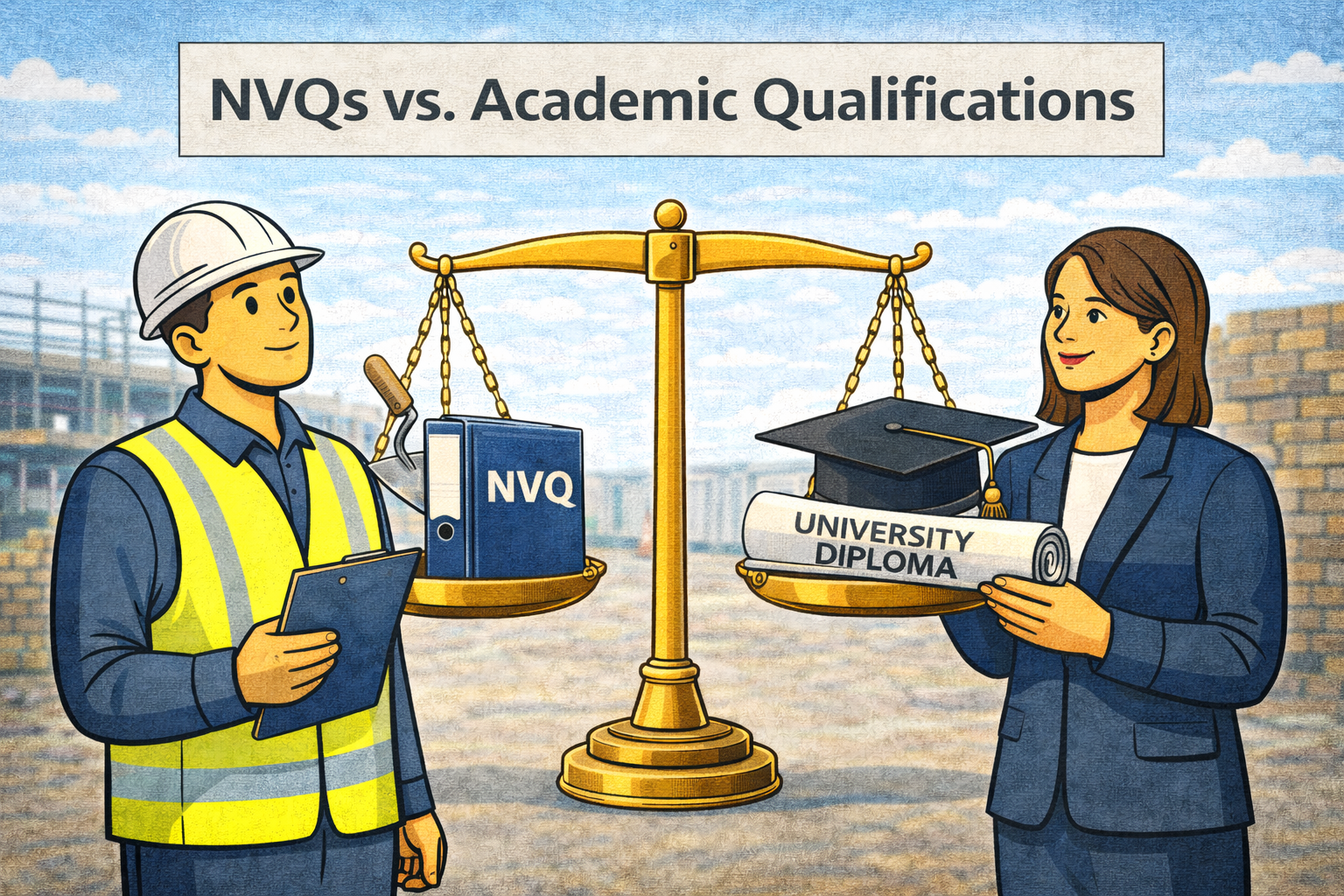
Is a Level 6 NVQ the Same as a Degree?
A Level 6 NVQ sits at the same qualification level as a Bachelor’s Degree.
However, they are very different in structure.
A university degree typically involves:
- Lectures and seminars
- Exams and written coursework
- Theoretical study and research
- Academic assessment
A Level 6 NVQ involves:
- Managing real projects
- Leading teams
- Controlling budgets and programmes
- Demonstrating professional decision-making
- Providing evidence of workplace competence
An NVQ proves you can perform the role in practice. A degree proves you have studied the subject academically.
Why NVQs Are Different from Academic Qualifications
The key difference is competence.
An academic qualification assesses what you know.
An NVQ assesses what you actually do.
For example, a
Level 6 NVQ Diploma in Construction Site Management requires you to demonstrate responsibility for health and safety systems, programme control, commercial awareness and team leadership on real projects.
A
Level 3 NVQ Diploma in Occupational Work Supervision requires you to show that you actively supervise work, manage resources and maintain safety standards on site.
A
Level 6 NVQ Diploma in Occupational Health and Safety Practice requires you to demonstrate leadership in health and safety management within the construction environment.
You cannot pass an NVQ by memorising information. You must already be performing at that level in your role.
Are NVQs Recognised by Employers?
In construction and technical industries, NVQs are widely recognised because they demonstrate verified workplace competence.
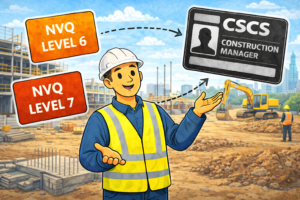
Level 6 and Level 7 NVQs are commonly used for:
They are particularly valued in sectors where practical responsibility and on-site experience are essential.
Can You Progress from an NVQ?
Because NVQs sit within the national qualification framework, they support progression.
For example:
- A Level 3 NVQ can lead to Level 6 management qualifications
- A Level 6 NVQ can progress to Level 7 senior management qualifications
- Some universities may consider Level 6 or Level 7 vocational qualifications as part of postgraduate applications, subject to their own entry criteria
Acceptance for academic study is always determined by the university.
Which Route Is Right for You?
An academic qualification may be suitable if you want a classroom-based, research-led pathway.
An NVQ is suitable if you are already working in the role and want formal recognition of your competence without returning to full-time study.
In construction and health and safety management, NVQs provide a practical route to recognised qualifications while continuing to work.
Thinking About a Construction NVQ?
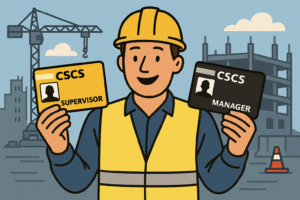
If you are already working as a Supervisor, Site Manager, Project Manager or Senior Construction Manager, an NVQ could provide the formal qualification you need for card applications or career progression.
You can browse our:
We carry out a free, non-committal profiling call to confirm your suitability before enrolment.