Who this NVQ is for
This qualification is aimed at working supervisors, not office-based managers.
It’s designed for people who are already trusted on site to keep work moving, manage operatives, and deal with issues as they arise.
Typical roles include:
- Gangers and chargehands
- Trade supervisors
- Section supervisors
- Lead operatives stepping up
- Anyone directing people, work, or plant on site
If you’re planning work, running briefings, checking quality, or being relied on to sort problems out on site, you’re already doing the role this NVQ is designed to recognise.
How CADUK assess this NVQ
There’s more than one way to deliver an NVQ. Some providers rely heavily on written work. Others insist on site visits or formal observations.
At CADUK, we’ve developed a different approach.
We assess the Level 3 NVQ Diploma in Occupational Work Supervision using a structured, discussion-based method supported by real evidence from your job. It’s designed to be simple to use, easy to understand, and realistic for working supervisors.
We’ve been delivering this NVQ using our assessment system since 2011. Over that time, we’ve refined the process to remove unnecessary barriers, avoid over-assessment, and keep the focus on what actually matters – demonstrating competence on real construction sites.
Your assessor will be an experienced construction professional who understands how sites actually run. The professional discussion is a relaxed, structured conversation about how you do your job, not a test.
How the fast-track route works
Step 1 – Apply online
Apply using the short form here.
Step 2 – Free assessor profiling call
After you apply, one of our assessors will call you for a free, non-committal chat.
This call is to confirm that the NVQ is achievable for you. We’ll talk through your role, explain how the assessment works, and outline the type of evidence you’ll need. If it’s not the right fit, we’ll tell you straight.
Step 3 – Approval and payment
If the assessor confirms that the NVQ is suitable for you, we’ll move you on to enrolment.
We’ll arrange payment at this stage. You can pay by credit card, debit card, or choose an interest-free payment plan with Klarna.
Step 4 – Registration and ePortfolio access
Once payment is in place, we’ll register you on the qualification and set up your online ePortfolio.
You’ll receive your login details and clear instructions on how to access the system. The ePortfolio is designed to be simple to use and evidence can be uploaded easily from your phone, tablet, or computer.
Step 5 – Assessor induction
You’ll then be handed over to your assessor, who will book you in for a short (Zoom) induction call.
During the induction, your assessor will show you exactly how the ePortfolio works, explain what evidence to upload and where, and answer any questions. The aim is to make sure you feel confident and clear before you start.
Step 6 – Collect and upload evidence
After the induction, you’ll begin uploading evidence from your day-to-day site work.
Evidence typically comes from normal site activity and might include:
- RAMS
- Daily briefings or toolbox talks
- Site photos showing work in progress
- Programmes or task lists
- Induction or sign-in records
- Emails or WhatsApp messages relating to the work
- Quality checks or snagging items
We’ll provide clear guidance on the type of evidence that you’ll need to submit. You don’t need to submit everything on the list. Just enough evidence to clearly show you’re carrying out the supervisor role.
Simple video evidence
You’ll usually be asked to upload a few short phone videos, such as:
- Delivering a toolbox talk
- Walking around your work area explaining what’s happening
- Checking quality and explaining what you look for
No scripts, no editing, and no pressure.
Step 7 – Professional discussion on Zoom
Once your evidence is in place, you’ll complete a professional discussion over Zoom with your assessor.
This is a relaxed, structured conversation about how you do your job day to day. It’s not a test, and there are no right or wrong answers.
Your assessor will guide the discussion and break questions down into simple parts. Rather than asking you to “explain standards” or quote rules, they’ll ask you to give real examples of how you handle things on site.
How quickly can it be completed?
- Many candidates finish in 2–4 weeks
- Some complete even quicker
- The main factor is how quickly evidence is uploaded
You have up to 12 months to complete the NVQ, but most people complete much faster due to the remote assessment approach.
CITB funding – employer grant available
CADUK is a CITB Training Provider Network member.
If your employer is CITB-registered and levy-paying, they can usually claim £600 back on completion of this NVQ.
No CSCS card right now?
If you’re struggling to stay on site because you don’t currently hold the right CSCS card, the Red Experienced Technical Supervisor or Manager (TSM) card can be used while you complete the NVQ.
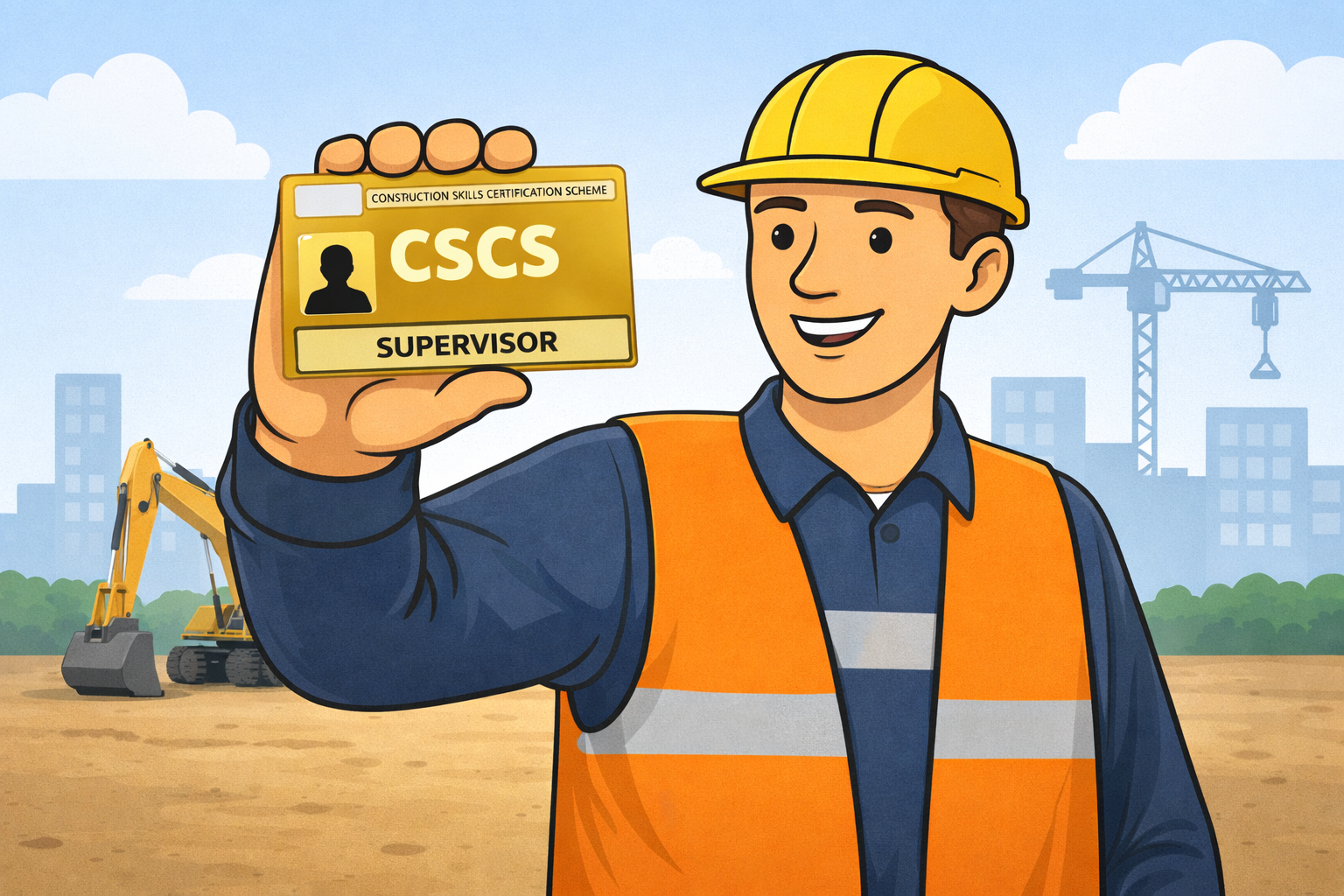
This allows you to get back on site, complete the NVQ properly, and then upgrade to the Gold Supervisor Card once finished.
More details here:
Red Experienced Supervisor / Manager CSCS Card
Ready to start your NVQ?
If you are already working as a supervisor and want to achieve the Gold CSCS Card, you can view full details of the qualification here:
Level 3 NVQ Diploma in Occupational Work Supervision
This includes the full assessment process, evidence requirements and how to apply.




Hi, I’m running a site in lake Windermere 16 million project as the site manager.
Is my company Clarke Construction management services.
I was thinking of doing this course for a gold card.
We have all the relevant paperwork on site and had a HSE inspection and all good on site.
Just thinking a gold card would be a great help moving forward.