
Category
Management
CSCS Card
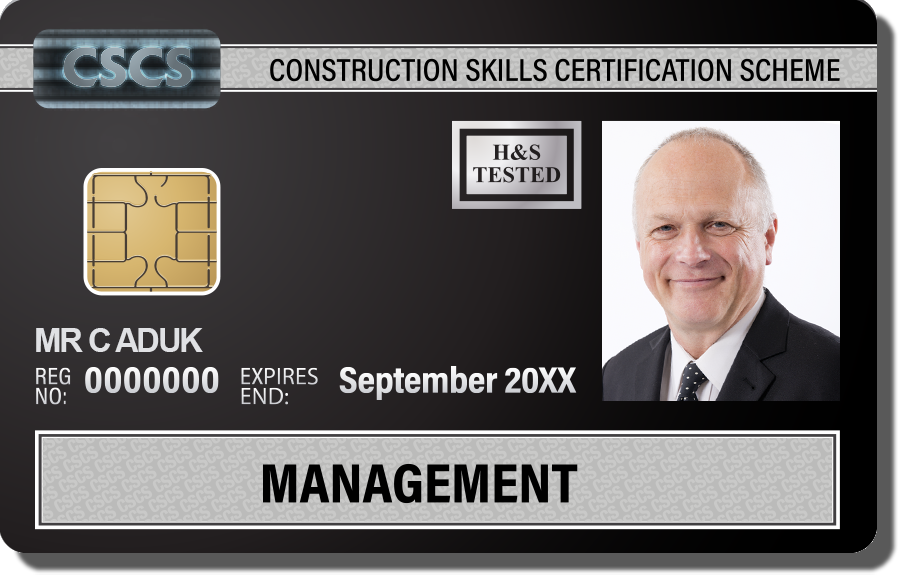
Black (Manager)
Qualification Level
Level 7 NVQ Diploma
Assessment Method
Fast-Track, Online
Cost
£2100 + VAT
The Level 7 NVQ Diploma in Construction Senior Management is designed for experienced construction professionals who lead projects, teams and business performance at a strategic level.
It is typically suited to project managers, contracts managers, commercial managers and construction directors who are responsible for overall project delivery, strategic planning and high-level decision making.
This qualification formally recognises your ability to lead construction projects at a senior level, managing strategy, performance and decision making across one or multiple projects.
Achievement of this NVQ provides access to the Black CSCS Card and meets the academic requirements for eligibility to apply for MCIOB through CIOB’s Shortened (fast-track) Professional Review route.
This NVQ is completed entirely through your existing job role. There are no exams, no classroom sessions and no written assignments. Instead, you will provide evidence from your live projects and complete professional discussions with your assessor.
Most candidates complete the qualification within 4 to 12 weeks, depending on their experience and how quickly they can provide suitable evidence.
This Level 7 NVQ is designed for experienced construction professionals who are already operating at a senior management level.
It is typically suited to roles such as:
• Project managers
• Contracts managers
• Commercial managers
• Construction directors
• Operations or business unit managers
You should already be responsible for leading projects, managing teams, making strategic decisions and influencing commercial or organisational performance.
A construction senior manager is responsible for the overall planning, coordination and performance of construction projects and business operations.
At this level, the focus is on strategy, leadership and decision making rather than carrying out tasks or supervising individual activities on site.
In simple terms, you will be assessed on your ability to:
• Develop and implement project strategies
• Manage commercial performance, budgets and cost control
• Lead teams and coordinate multiple stakeholders
• Oversee programme delivery and project performance
• Manage risk, change control and decision making
• Ensure compliance with health, safety, quality and environmental standards
• Influence organisational performance and long-term outcomes
Your Level 7 NVQ is assessed through professional discussion and real workplace evidence. There are no exams, no classroom sessions and no written coursework.
Everything is delivered remotely and built around your existing job role.
As this is a competence-based qualification, all assessment must take place in a real work environment and be based on your actual responsibilities.
You will complete the NVQ through a structured combination of:
• Professional discussions with your assessor via Zoom
• Strategic documents from your real work such as programmes, risk registers, procurement strategies and project plans
• Evidence of decision making including emails, meeting minutes, change control and cost reports
• Supporting evidence such as screenshots or photos where appropriate
Your assessor will guide you throughout and ensure your evidence is correctly mapped to each unit.
Most of the Level 7 NVQ is completed through structured professional discussions supported by your real workplace evidence.
These are informal, one-to-one conversations where you explain how you manage projects, lead teams and make strategic decisions in your role. There are no exams and no prepared answers required.
During the discussions, your assessor will bring your evidence documents up on screen and ask you to talk through how you use them in practice and how they support your decision making.
For example, a discussion may start by reviewing your project risk register and asking you to explain how you identify, assess and control risk across a project. You may then be asked to talk through how you manage change control, how you protect programme and commercial performance, and how you develop and implement project strategy.
The discussion reflects how you actually work as a senior manager, allowing you to demonstrate your competence through real examples rather than theory.
At Level 7, your evidence must demonstrate senior-level responsibility, leadership and strategic decision making.
You are not being assessed on tasks or site activities. Instead, the focus is on how you manage projects, people and business performance.
Examples of suitable evidence include:
Strategic and project delivery documents
• Project execution plans or strategies
• Programmes and planning records
• Risk registers and mitigation plans
• Design coordination documents
• Stakeholder and communication plans
• Change control records
Commercial and financial evidence
• Cost reports, budgets or forecasts
• Value engineering decisions
• Procurement strategies or tender evaluations
• Subcontractor performance reviews
Quality, safety and compliance
• Audit reports
• Temporary works or compliance documentation
• Investigation reports
• Environmental or sustainability plans
Leadership and organisational evidence
• Meeting minutes at project or leadership level
• Performance reviews or KPIs
• Team structures or organisational charts
• Evidence of mentoring or staff development
• Emails showing senior-level decision making
Most of the NVQ is completed through professional discussion supported by this evidence.
The Level 7 NVQ Diploma in Construction Senior Management consists of six mandatory units and a selection of optional units.
In most cases, candidates complete a total of 9 or 10 units, depending on the optional units chosen.
These units are based on your real responsibilities as a senior construction manager and reflect the strategic nature of your role.
In simple terms, you will be assessed on your ability to:
• Manage project processes from planning through to completion
• Lead and manage teams across multiple projects
• Provide professional judgement and ethical decision making
• Control project performance including cost, programme and quality
• Plan workforce requirements and resource allocation
• Develop yourself and others within the organisation
You will then complete additional optional units depending on your role. These may include areas such as procurement, tendering, sustainability, design management or project planning.
Your assessor will guide you through the unit selection to ensure it matches your job role and experience.
Most candidates complete the Level 7 NVQ within 4 to 12 weeks depending on how quickly they can provide evidence and arrange their discussions.
You are given up to 12 months to complete the qualification if required.
Yes. Many candidates complete the Level 7 NVQ in less than 4 weeks.
Because this is a competence-based qualification rather than a training course, there is no fixed schedule or learning period. You are being assessed on the work you already do, so it is entirely possible to complete the NVQ quickly if you engage with the process.
To fast-track the qualification, you will need to:
• Be responsive when your assessor requests evidence
• Upload your documents to the ePortfolio system promptly
• Be available for professional discussion sessions
• Stay engaged and motivated throughout the process
Candidates who actively engage and provide their evidence quickly can complete the NVQ in a matter of weeks.
If you prefer to take more time, you are given up to 12 months to complete the qualification, allowing you to progress at a pace that suits your workload.
When you click the 'Book Your NVQ Now' button, you will be taken to a short online application form. This form gives you an overview of the qualification and the types of evidence you may need.
Once you submit the form, one of our Level 7 assessors will contact you for a short, informal discussion. This is not a test or interview. It is simply a conversation to understand your role and experience.
During this call, the assessor will confirm:
• Your level of responsibility within your organisation
• Whether you are operating at a senior management level
• The types of projects you are involved in
• Your role in leadership, decision making and commercial performance
• The types of evidence you are likely to have available
This allows us to make sure the qualification is suitable, achievable and aligned with your current job role.
The profiling process is completely free and there is no obligation to proceed.
If you are approved and decide to go ahead, your NVQ can start immediately.
Unfortunateley, this qualification is no longer eligible for the CITB Short Qualification Grant for new registrations.
CITB have confirmed that the £600 Short Qualification Grant now only applies to learners who were registered onto the Level 7 NVQ Diploma in Construction Senior Management before 8 December 2025.
To remain eligible, those learners must:
• Successfully complete the qualification by 31 March 2028
• Notify CITB of their original registration start date by submitting evidence to grant.product@citb.co.uk
• Ensure that this evidence is submitted no later than 31 March 2026
Failure to provide this evidence by the deadline will result in the grant application being rejected by CITB.
If you were registered before 8 December 2025 and require confirmation of your registration date, please contact us and we will provide the necessary documentation.
CITB Levy & Grants Team
Telephone: 0344 994 4455
Email: levy.grant@citb.co.uk
Full details are available at www.citb.co.uk under Grants and Funding.
Completing the Level 7 NVQ meets the academic requirements for Chartered Membership of CIOB (MCIOB) through the shortened professional review route.
This is a fast-track option for experienced construction professionals who hold a Level 7 qualification.
Your CADUK assessor, who is a Chartered Member or Fellow of CIOB, can provide guidance on preparing your application once you have completed your NVQ.
This support is provided free of charge, independently by CADUK and is not affiliated with CIOB.
Project managers often ask us what the difference is between the Level 6 NVQ in Construction Contracting Operations Management and the Level 7 NVQ in Construction Senior Management.
The key difference is the level of responsibility and the scope of your role.
Level 6 is typically suited to professionals who are managing specific aspects of construction projects such as commercial functions, planning, estimating or technical coordination. It reflects responsibility for delivery, control and performance within a defined role.
Level 7 is designed for senior professionals who have overall responsibility for projects or multiple projects. This includes setting strategy, leading teams, managing commercial performance and making high-level decisions that affect project or business outcomes.
Level 6 focuses on managing delivery and operational responsibilities within a project.
Level 7 focuses on leading projects, people and organisational performance at a senior level.
If you are unsure which level is right for you, our assessors will confirm this during the initial profiling discussion.
Yes. You can apply for the Red Experienced Technical Manager (TSM) CSCS Card while completing your NVQ.
This shows that:
• You are experienced in a management role
• You are registered on the Level 7 NVQ
• You are actively working towards completion
To apply for the red 'TSM' Card, you will need to show that you have passed the CITB 'Managers and Professionals' (MAP) Health, Safety and Environment Test within the last two years.
You can then upgrade to the Black CSCS Card once qualified.
CADUK specialises in construction management NVQs and focuses specifically on supervisor and manager-level qualifications.
Our assessment model is designed for experienced professionals, which means the process is structured to be efficient, realistic and based on your actual job role rather than unnecessary paperwork.
With CADUK, you will benefit from:
• A simple, fast-track assessment process built around your real work
• No exams, no classroom sessions and no written coursework
• Experienced assessors who understand senior construction roles
• Flexible remote assessment that fits around your workload
• Clear guidance on what evidence is needed and how to present it
• Free support towards MCIOB application from CIOB Chartered assessors
We have delivered thousands of construction NVQs and our systems are designed to make the process straightforward while remaining fully compliant with awarding body requirements.

Category
Management
CSCS Card
Black (Manager)
Qualification Level
Level 7 NVQ Diploma
Assessment Method
Fast-Track, Online
Cost
£2100 + VAT

Part of the CADUK Group of companies – supporting construction professionals with NVQs since 2011.
© 2025 CADUK – All rights reserved.
This site is protected by reCAPTCHA and the Privacy Policy and Terms of Service apply.
Secure payments with